
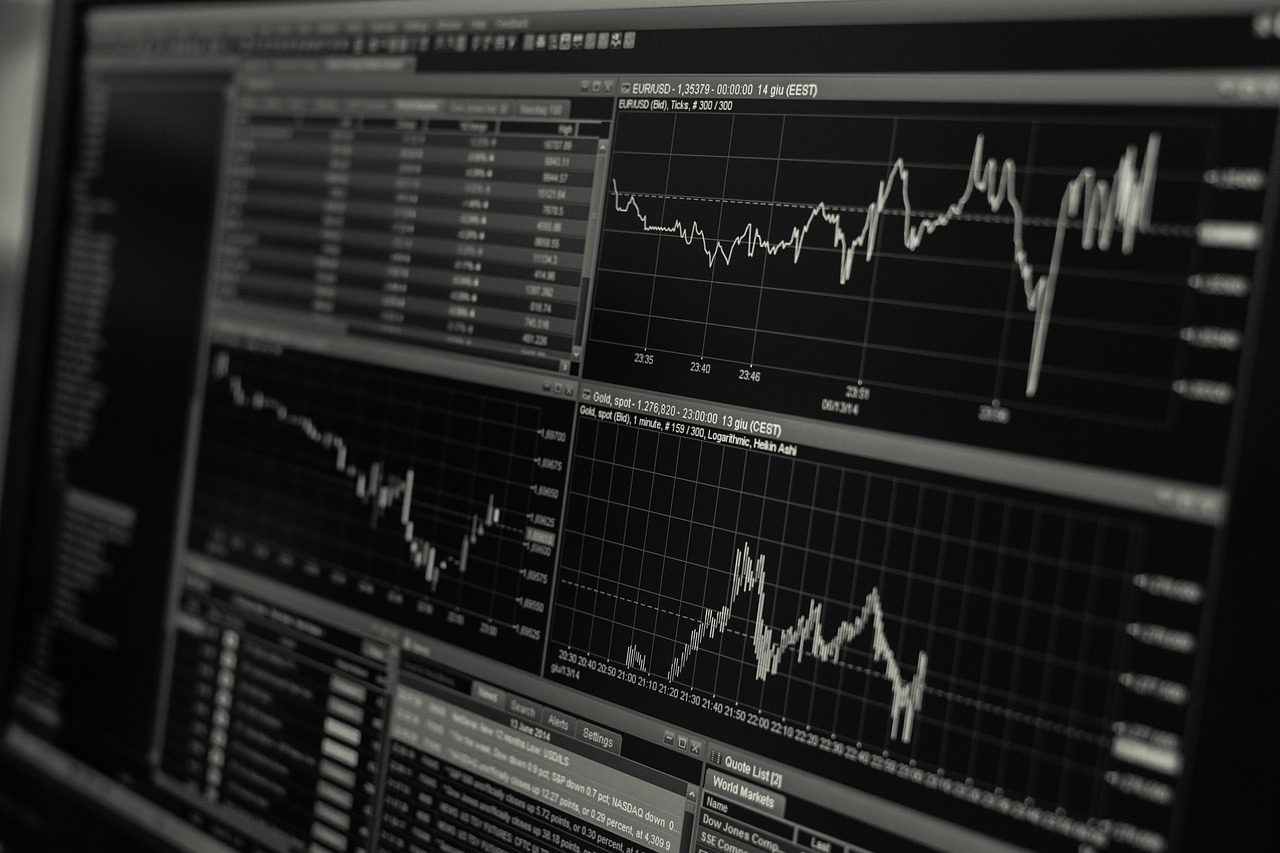
Trading in prop firms gives an exceptional chance for traders to access huge capital and utilize their skills professionally. However, it is important to note that success in prop firms, primarily in day trading and forex trading, requires a step by step method. Consistently building a trading strategy is vital for any trader working with prop firms. This article presents how to construct a solid and repeatable trading system with specific focus on the intricacies of forex and day trading in prop firms.
Understanding Prop Firms and Their Requirements
A proprietary trading firm, or prop firm, is a company that employs traders to conduct trades for them using the company’s funds. The firm’s funds usually come in a certain amount, and the trader is allowed to use these funds for trading with the expectation that the profits will be shared. Prop firms have become a common alternative for forex and day traders who want to utilize large sums of money which would normally be hard to come by. Nonetheless, it is very much possible to get access to large amounts of money, but this requires a certain degree of skill and consistency.
Proprietary firms have their own difficulties in day trading. These companies usually mandate that traders demonstrate consistent profitability, implying that the strategies employed by the traders need to be dependable over time. Certainly, forex trading is well known for its volatility and hence traders must possess sound skills in market analysis, risk management, and discipline in psychology.
The Importance of a Trading Plan
Every successful trading strategy relies on a well-crafted trading plan. In the case of day trading in prop firms, having a disciplined plan enables the trader to execute movements that are rule-based as opposed to emotionally driven or impulsively acted upon.
A trading plan for forex trading should comprise market analysis, well defined entry and exit levels, and specifically predefined exit and stop loss levels. Targets and limits for desired profit and loss are key goals that should be defined. In addition, it must declare the amount of capital per trade to be risked per trade so that the trader does not risk more than a small percentage of the capital on any one trade.
In prop firms, traders need to create a strategy that encompasses both fundamental and technical analysis. For example, forex traders may monitor the interest rates, GDP growth, and even geopolitical risks on a macro scale alongside the charts, and decide when to execute their trades. The fundamental and technical approaches offer a more sophisticated plan when used together.
Forwarding and Looking Beyond – Detailed Examination of Forex Trading
Predicting the short-term price fluctuation is extremely crucial as a Forex day trader. This explains the essence of the fundamental and technical analysis in Forex trading.
Technical analysis entails evaluating price charts and applying other relevant tools like moving averages, RSI, and Fibonacci retracement to predict price direction. For a prop firm day trader, technical analysis is essential in making decisions on which price to take the position on. By developing a strategy defined by the indicators, Forex traders can take advantage of trends, reversals, and breakout opportunities.
Alternatively, a trader’s fundamental analysis consists of knowing the economic factors that influence the forex market. In the case of forex traders, this means monitoring central bank activity, inflation rates, employment statistics, and even international relations. The better a trader understands currency pairs with respect to other economic indicators, the better he will be able to predict price changes for the right reasons.
In most cases, prop firms would prefer a trader who is adept at using both technical and fundamental analysis. Understanding what the new information is makes it possible to begin making timely strategic shifts in such a rapidly changing environment. A sound trading plan will not be based solely on one type of analysis, but rather will integrate both types in order to cope with the realities of trading in the forex market.
Risk Management: One More Element of Discipline
When dealing with prop firms, one of the core objectives on the table is to protect capital while making sure profits remain as consistent. Effective risk management is perhaps the most important in achieving this goal. The most liquid and volatile market has its own opportunities and dangers. Without properly defined risk management, even the best plan can fail.
A reliable trading approach is built around defining risk boundaries. An example of such a technique is employing a stop-loss order, which automatically closes a position when a currency pair exceeds the desired loss margin. This avoids extreme drawdowns and guarantees that a single trade doesn’t completely deplete a trader’s account. Furthermore, a reliable approach usually also entails the use of position sizing techniques, such as risking only one or two percent of the total trading capital on a single trade.
In the case of prop firms, risk management becomes even more important. With funds on the line, ensuring a controlled level of risk is non-negotiable if you want to be profitable over the long term. Prop firms often enforce specific risk boundaries for their traders, such as maximum losses per day or drawdown caps per month. Following these risk boundaries and employing them into your trading plan enables you to save capital, avoid massive losses, and remain in business long enough to profit.
Building Emotional Discipline for Consistency
Psychological factors are critical in day trading and forex trading. A day trader, especially someone starting out in prop firms, tends to make the common mistake of allowing emotions such as fear and greed to control their decisions. This is where the need for emotional discipline comes into play.
In order to ensure that the trading strategy is successful, traders need to remain calm and composed at all times, even when things do not seem to be going in their favor. For example, many traders get very frustrated after experiencing a streak of losing trades. Consistent traders understand that losses are part of the process, and therefore stick to their strategy. On the contrary, some traders tend to exhibit overconfidence after a winning streak and at times, risk more than they are supposed to. This results in unnecessary losses, thus negatively impacting consistency.
For traders in prop firms, emotional discipline tends to be the most crucial because the pressure to make consistent profits is high. It is advisable to control emotions by following the rules in your trading plan and avoiding any deviations based on temporary emotions or market noise. Many traders use journals, where they record their trades along with their emotional state during each trade. This helps them develop self-awareness and leads to better decision-making in the long-term.
Backtesting: Proof for Your Strategy
Prior to executing real-time trades, it is necessary to practice the strategy one wishes to use on a prop firm’s money by backtesting it. Backtesting is a process of using historical data of the market to see how your trading strategy would have fared in the past. This step aids profit potential while estimating risk involved in the strategy. Also, backtesting ensures that the trading plan works before live execution.
It is of particular importance to forex traders working in prop firms. The forex market can be extremely unpredictable, and testing a strategy through different market conditions ensures it is robust enough for real-life application. A lot of prop firms have a policy that requires traders to prove their strategies applicable before they can manage big accounts, and backtesting helps greatly in this.
In addition, traders are confident when making changes to the strategy because it guarantees success. By increasing confidence, an appropriate approach to trading is created, and helps traders to succeed.
Consistency is the Key to Success in Prop Firms
The most challenging task for every trader is to become consistent. Be it day trading and or forex trading, having a consistent approach will always win your favor in prop firms. It is easy to chase after trades that are high rewarding and high risk, but financially a disciplined trader understands that the journey to consistently profiting starts with small and gradual disciplined executions.
A trading strategy driven by consistency is the blending of a technical and fundamental analysis, superb risk management, emotional discipline, and back testing. A trader employing all these factors will be able to increase their chances of success steadily in the highly competitive world of prop firms.
To sum up, developing a strategy that is consistent with your execution for prop firms requires a lot of knowledge and insight in the forex market and also in the dynamics of day trading. Having an emotional and data driven iterative structured approach provides the traders with the chances of successfully growing their strategic approach to trading in prop firms in the long run.