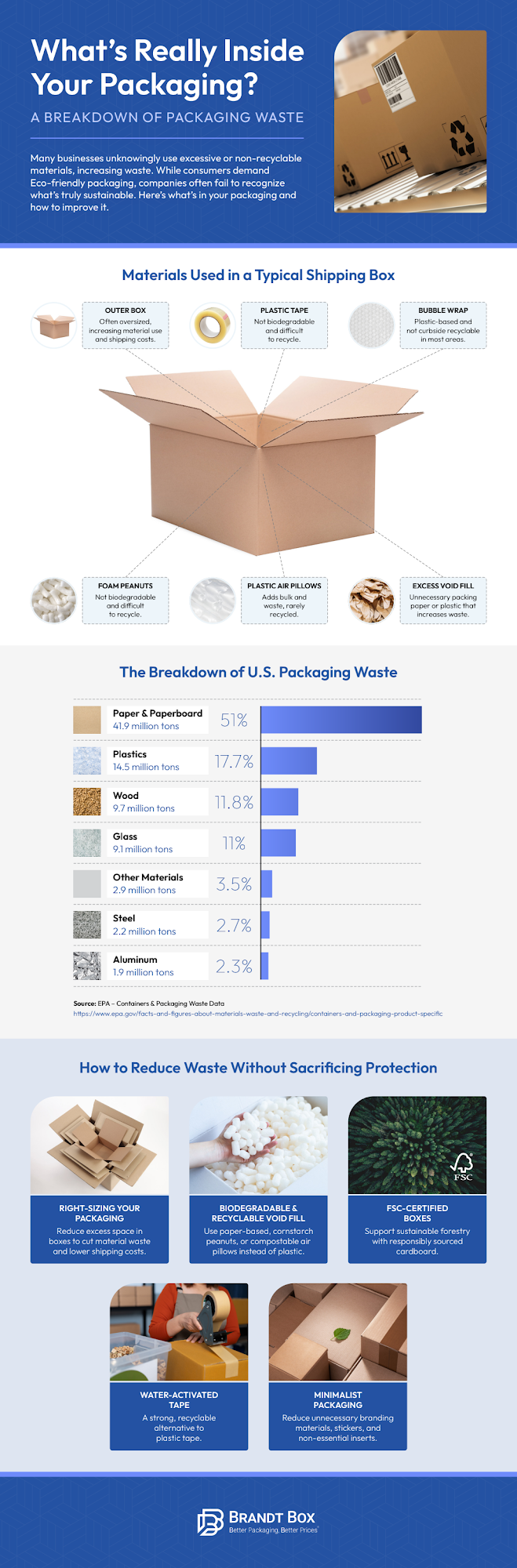
Packaging plays a crucial role in protecting products, ensuring safe delivery, and reinforcing brand identity. Have you ever stopped to consider what happens to all that packaging after it serves its purpose? Businesses often rely on excess materials without realizing their long-term environmental impact. Sustainable packaging isn’t just a trend — it’s an opportunity to cut costs, improve efficiency, and meet the rising expectations of ecoconscious consumers.
Understanding Hidden Waste in Your Packaging
Many companies believe they are making sustainable choices but unknowingly use materials that are difficult to recycle or take centuries to break down. Single-use plastics, excessive void fill, and oversized boxes all contribute to unnecessary waste. While these materials may seem essential for product protection, innovative alternatives can offer the same durability while significantly reducing environmental harm.
One overlooked factor is multi-material packaging — combinations of plastic, foil, and adhesives that make recycling nearly impossible. These designs may improve aesthetics or durability but often lead to landfill accumulation. Another common issue is plastic-based void fill, such as air pillows and foam peanuts, which provide cushioning but aren’t biodegradable. Many of these materials are disposed of improperly, contaminating recycling streams and increasing waste management costs.
By evaluating the true necessity of each packaging element, businesses can refine their approach to shipping while reducing their environmental footprint.
How Sustainable Packaging Enhances Brand Perception
Today’s consumers pay attention to how businesses approach sustainability. Ecofriendly packaging isn’t just about reducing waste — it’s about making a statement. When customers receive an order in thoughtfully designed, recyclable packaging, it reinforces trust and a commitment to responsible business practices.
Brands that invest in sustainable packaging often experience higher customer loyalty and stronger brand differentiation. Shoppers increasingly choose businesses that align with their values, and packaging is one of the first impressions a company makes. A growing number of consumers are also reusing and repurposing packaging, so making it both functional and ecofriendly adds value beyond the initial unboxing.
Sustainability efforts also extend beyond materials to packaging efficiency. Optimizing package sizes to fit products more precisely reduces excess waste and lowers shipping costs. It also decreases the carbon footprint associated with transportation, as smaller, lighter shipments require less fuel.
Forward-thinking brands are also exploring innovative solutions like compostable materials, plant-based inks, and dissolvable mailers, proving that sustainable packaging doesn’t have to compromise quality or durability. By rethinking packaging design, businesses can create an experience that’s not just visually appealing but also aligned with modern environmental standards.
For insights on optimizing your packaging while minimizing waste, check out the resource below.